

Long-form analysis / Match analysis
Why have away wins become more common?
Away wins were markedly rarer in the early years. Testing three points for a win, fewer draws, dominant clubs and crowds separately shows why no single explanation is enough.
Updated: 29 October 2026
The difference is more than nostalgia
Were away trips harder in the old days? Rather than relying on memories of intimidating grounds, we tested how often visitors won. Across the 31 fully recorded seasons within the league’s first 35, the away win rate was 18.5%. In the following 33 it reached 28.2%: a shift from roughly once in five matches to once in three and a half. How much came from the game changing, and how much from winning becoming more valuable?
There are 68 completed seasons from 1959 through 2025/26, not two separate blocks of 35. Four early seasons lack complete venue results. We applied an extreme check: even assigning every unresolved decisive match in those four seasons to the visitors leaves the first 35 seasons at no more than 25.9%, below the later 28.2%. Missing records make the size uncertain, but cannot reverse the direction.
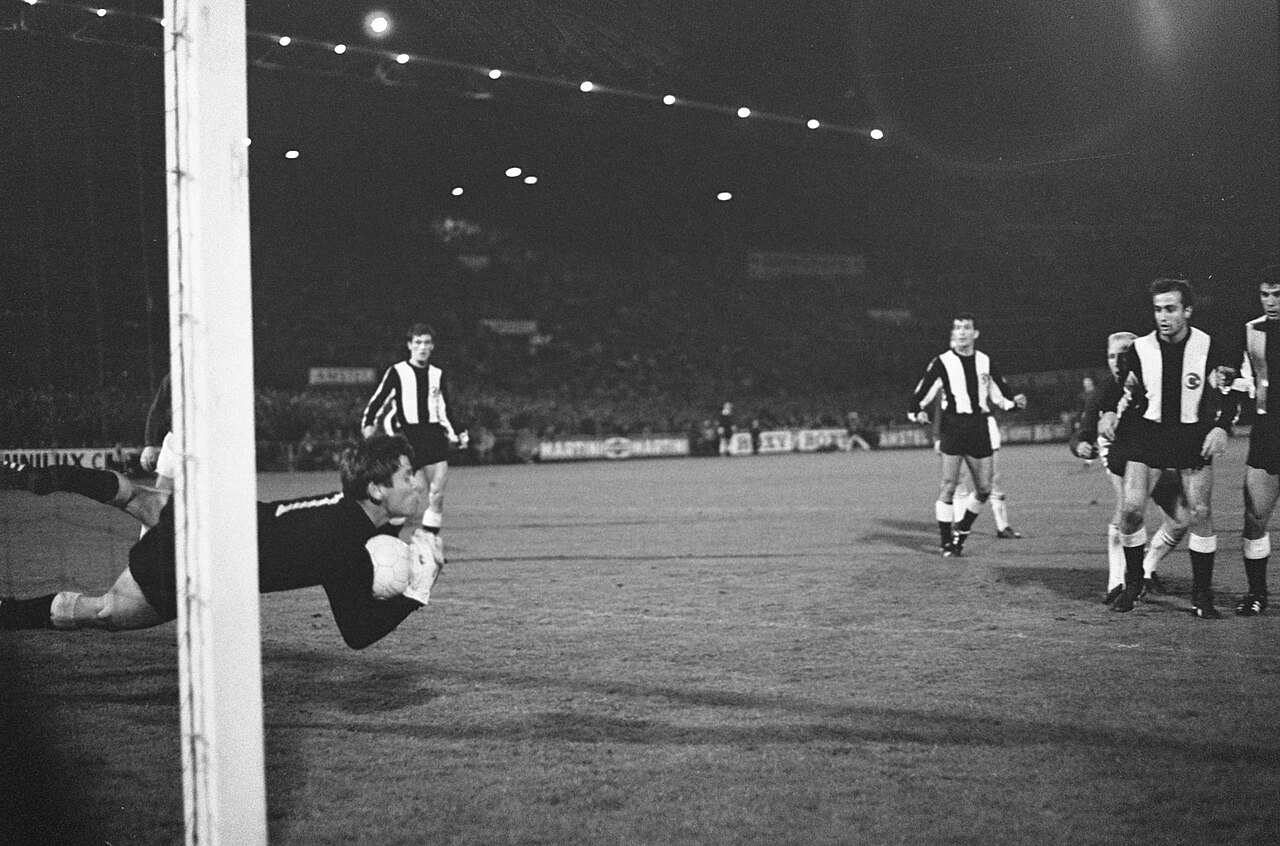
Photo information
Image record and usage information ↗Fewer draws explain only part of the difference
The share of away wins could rise automatically as draws become rarer. We therefore also examined only decisive matches. Visitors won 27.1% of those in the complete early seasons and 37.5% in the later period. Alongside fewer draws, the balance of decisive games also shifted towards the away side.
The scoring gap moved the same way: visitors’ goal deficit per match narrowed from about 0.58 to 0.41. Home advantage remained. But the explanation cannot stop at a few former draws turning into wins: the visitors’ disadvantage in goals also shrank.
Table values
| Measure | 31 complete early seasons | Following 33 seasons |
|---|---|---|
| Matches | 8326 | 10390 |
| Away wins | 1542 | 2934 |
| Away wins (%) | 18.52 | 28.24 |
| Away goal difference / match | -0.58 | -0.41 |
The clearest rule change: three points for a win
Before 1987/88, two draws earned as many points as one win. Afterwards a win earned one more point than those two draws. The reward for pursuing victory rather than protecting an away draw changed. Visitors won 17.0% of matches across the six seasons before the rule and 24.7% across the six afterwards. This shift began before the end of our first 35-season block.
Tuğbay İnan’s study of the Turkish league also found lower home advantage under three points. Its measure is the home share of points, not our away win percentage. Agreement in direction strengthens the explanation, without removing simultaneous changes in squads, tactics or the balance between clubs.
Crowds mattered, but the shift preceded the pandemic
The pandemic offered a way to examine crowds. A multi-league study including Türkiye found reduced home advantage without spectators. That cannot serve as the sole explanation for six decades. Removing 2019/20 and 2020/21 entirely from the later period still leaves an away win rate of 28.1%. The longer-term shift had developed well before grounds closed.
Easier travel, accommodation, familiarity with unfamiliar grounds and better opposition preparation are plausible candidates too. Research on home advantage considers these factors together. We do not have historical travel times matched to results, so we have not invented a percentage of the change attributable to air travel.
Can dominant clubs explain it?
We separated fixtures involving none of the traditional big four. Away win rates there rose from 15.9% in the complete early seasons to 25.9% later. The finding is therefore not confined to dominant clubs winning more easily at smaller grounds. Yet the Istanbul derbies between Galatasaray, Fenerbahçe and Beşiktaş did not show that rise: their away win rate moved from 27.7% to 24.5%. Different types of fixture tell different stories.
That final comparison has a smaller sample and includes shared stadiums in the earlier era. It is still useful: competitive balance, familiarity with grounds and opponent strength may help explain why a national trend does not appear uniformly in every fixture.
Away trips did not become an advantage; their penalty narrowed
The strongest explanation combines the higher reward for winning under three points with a gradual weakening of the home edge. Fewer draws explain part, but not all. Research supports a crowd effect, yet the pandemic did not create the long-term difference, and the rise survives excluding the big four. Travel and preparation remain plausible contributors, without a fabricated estimate of their size.
Within those limits the answer is clear: visitors won more often and fell less far behind in goals. That does not automatically mean Turkish football became better. The supported finding is more specific: accepting an away draw became less rewarding, and some disadvantages associated with venue, opponents and surroundings weighed less heavily in the results.