What did VAR change in Turkish football?
Eight seasons on each side test expectations of more goals, more penalties and less home advantage. The results resist a single-technology explanation.
Match analysis · 4 min read · All90Read the story →

 Beyond the score.
ALL90 / ARTICLES
Turning points in seasons, clubs’ journeys and what the numbers reveal.
21articles
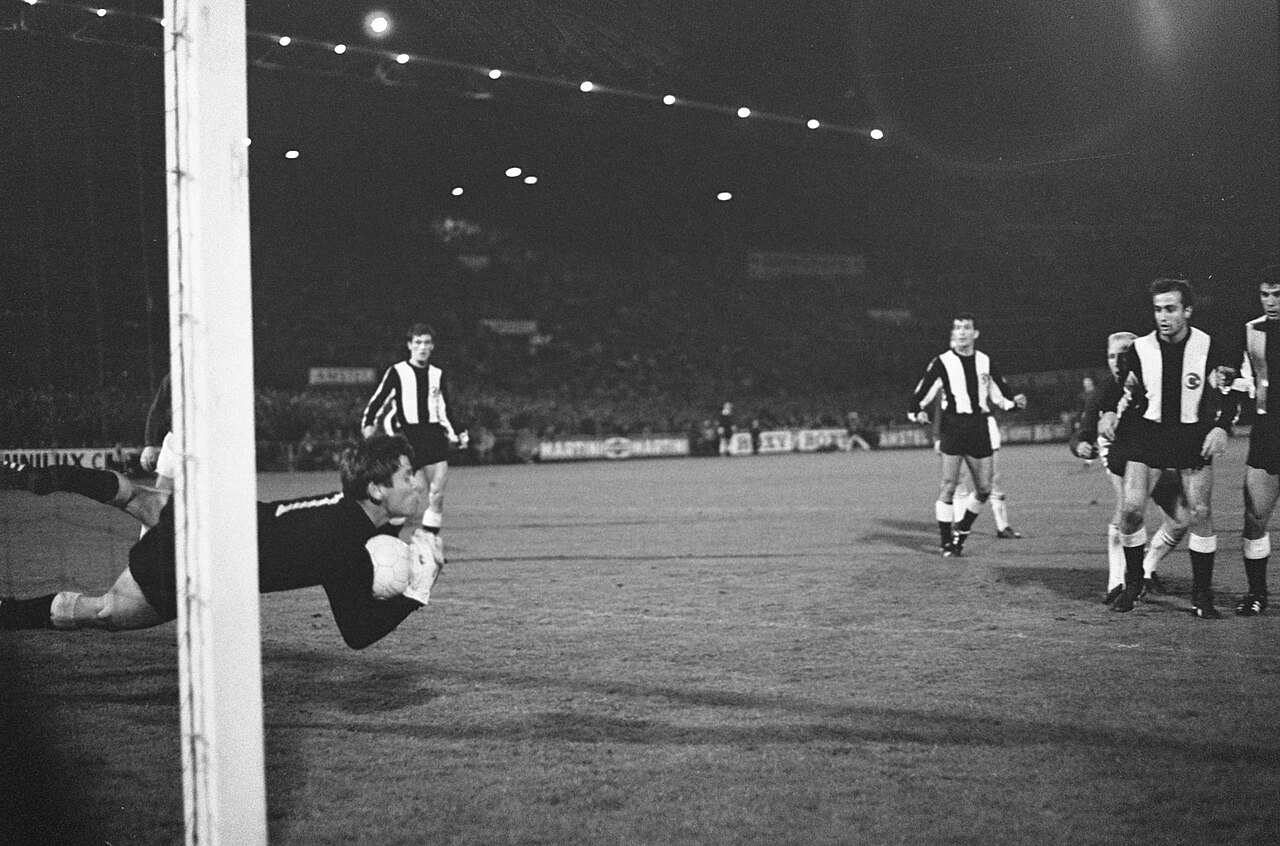
Fotograaf Onbekend / Anefo · Nationaal Archief · CC0 · Görünüm için kırpıldı; renkler korunmuştur.
21 articles
14 long analyses · 7 historical featuresEight seasons on each side test expectations of more goals, more penalties and less home advantage. The results resist a single-technology explanation.
Two seasons seemed to show narrower winning margins. Testing the idea across 64 complete seasons revealed why scoring at both ends is not a competition measure on its own.
Twelve wins once secured the title; in another season, 31 were insufficient. We compare the value of a draw, scoring averages and the changing title race.
Fenerbahçe’s second-half chance quality fell while Galatasaray created more. For Beşiktaş and Trabzonspor, goals and opportunity production did not move together.
Two final-day results decided the title. Bursaspor reached that point by combining their return against leading opponents with points across the rest of the league, without depending on one prolific scorer.
How should we compare the Turkish league’s great scoring seasons?
Reaching finals or finishing the job?
The first national-team opponent also leads the archive with 27 meetings. The calendar beyond major tournaments helps explain that repetition.
The net-breaking goal remains his signature. Six scoring titles explain why it is only the beginning of the story.
His 423 goals did not belong to one league. We follow the career through Istanbul, Italy and France, separating international football and the championships he won.
From international basketball to Fenerbahçe’s attack and Serie A: we follow Can Bartu through his appearances, goals and changing roles.
59 goals in 132 league games, four championships and two European trophies. We consider Hagi’s influence as both creator and finisher, rather than treating the trophy list as the whole explanation.
We examine his league output by season alongside scoring honours and team trophies, placing his sustained Fenerbahçe career next to his work in Brazil.
His playing career ended before the national league; his place at Beşiktaş did not. Scorer, captain and president belong to the same longer story.
Türkiye advanced from the group in three of six tournaments. Some campaigns brought scoring struggles, others late recoveries. We compare what worked and what failed rather than attributing everything to a gifted generation.
A team that scored 45 in 38 matches the previous season reached 103 in just 36. This was not a longer schedule: it was a rebuilt side whose attack grew more productive as the season progressed.
Everyone remembers the 2–1 in Trabzon. Eight matches each against top-five opponents, and just seven goals conceded by Fenerbahçe after halfway, help explain the road to that night.
There were champions before 1959 too. Their competitions, participants and formats explain why the current league’s history begins where it does.
Two 306-game seasons, six years apart, differed by 281 goals. Common clubs, relegated sides and European results help examine why.
Away wins were markedly rarer in the early years. Testing three points for a win, fewer draws, dominant clubs and crowds separately shows why no single explanation is enough.
Fewer draws: did Turkish football get better?
No article found. Try clearing the filters.